
What The Shawshank Redemption Teaches About Patience and Long-Term Planning
The Wall Looked the Same Every Morning
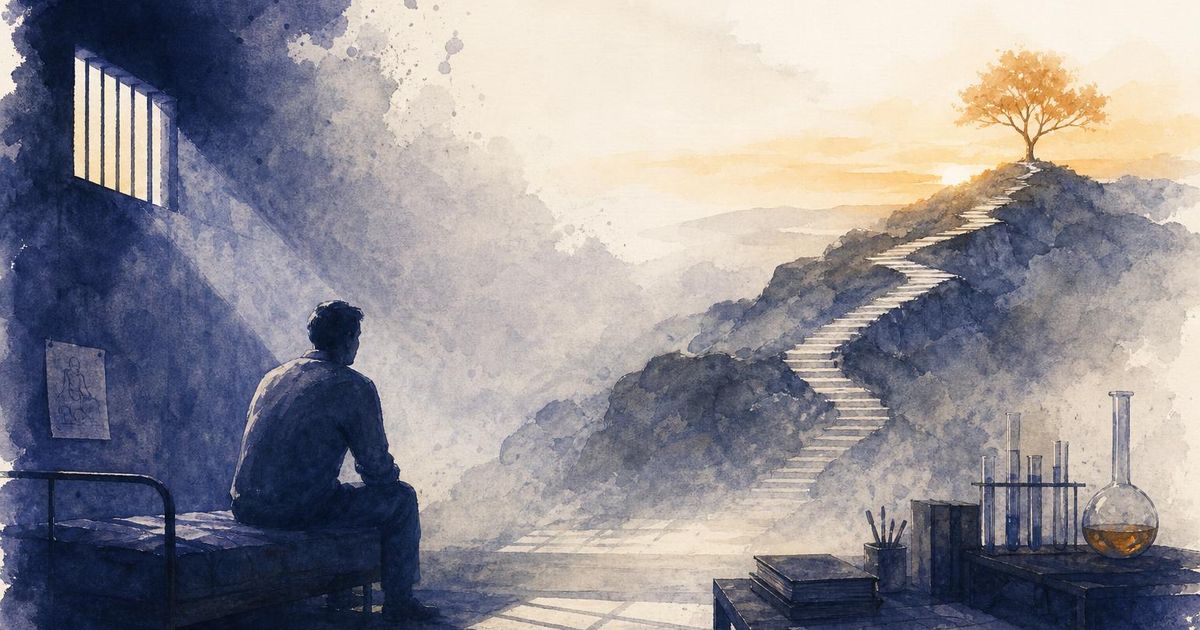
For nineteen years, Andy Dufresne chipped at a concrete wall with a rock hammer small enough to hide in a Bible. Every morning, that wall looked exactly the same. No visible progress.
But something was changing. He just couldn't see it yet.
I think about that wall a lot when I talk to faculty members who are three years into a five-year plan and can't see the progress. You submitted the grants. You said yes to the committee work, the mentoring, the teaching obligations that nobody seems to count toward promotion. And from where you're standing, nothing has moved.
It has. You just can't see through the poster yet.
Plans Nobody Else Can See
Here is what strikes me most about Andy's escape. It was not impulsive. It was a plan that unfolded across two decades in complete silence. Not even Red had any idea until it was done.
That kind of quiet commitment is what the biggest achievements in academic medicine demand.
- Tenure does not happen because of one great year. It happens because of seven or eight consistent years that build a case no committee can ignore.
- R01 funding does not materialize from a single submission. The NIH reports the median age of a first-time R01 recipient is 43 -- a decade of building preliminary data just to be competitive.
- Culture change in a department does not follow a memo. It follows years of modeling, hiring, and conversation that most people never have the stomach for.
These are rock-hammer projects. The people who achieve them are willing to work when nobody else can see the plan.
Two Letters a Week
Andy writes one letter a week to the state legislature requesting library funding. Two years. No response. When they finally send a small check and some used books just to shut him up, Andy starts writing two letters a week.
That is not stubbornness. That is strategy. The system is designed to wait you out. It assumes you will give up. When you don't, the calculus changes.
If you have ever pushed a curriculum proposal through three levels of committee review, you have lived this subplot. Angela Duckworth's research confirms what Andy demonstrated -- sustained effort toward a long-term goal, maintained through setbacks, predicts achievement more reliably than talent. Her book Grit: The Power of Passion and Perseverance is worth a read.
It is. Keep writing the letters.
He Didn't Just Wait. He Built.
Patience is not passivity. That distinction matters.
Andy didn't sit in his cell for nineteen years staring at the wall. He did the warden's taxes. He taught inmates to read. He built the best prison library in New England. He played Mozart over the loudspeakers and did two weeks in solitary without regret. He kept developing skills that would matter on the other side.
I see faculty members make one of two mistakes. Some grind away at a single goal so relentlessly that they burn out before it arrives. Others drift, filling time with obligations that don't compound into anything. Andy did neither. He was patient about the wall and intentional about everything else.
The faculty members who arrive at tenure in the best shape used the waiting years to build capabilities they didn't strictly need yet. They learned to manage budgets before they had one. They built relationships across departments before they needed a collaborator on a grant.
The Other Side of the Pipe
Andy's escape route was a sewer pipe. Five hundred yards of it. The most iconic scene in the film is a man crawling through filth because that was the only path to freedom.
Every long-term plan in academic medicine has a sewer pipe. A year when everything converges -- the grant deadline, the tenure review, the clinical load that somehow doubled. You do not get to skip that part. But you get to decide whether you enter it with a plan or without one. Andy knew where the pipe led. That made all the difference.
Get Busy Living
Red asks Andy how he can stand the slow game. Andy's answer is five words: "Get busy living, or get busy dying."
The faculty members I work with who build the most meaningful careers are not the ones who found shortcuts. They are the ones who committed to a plan and kept working when the progress was invisible.
If you are in the middle of a long-term plan right now -- chipping away at something nobody else can see -- that is not a sign the plan isn't working. That is exactly what the early years of a good plan look like.
Learn about how coaching for departments can help foster a culture of accountability.