
Remember the Titans and Leading Divided Teams
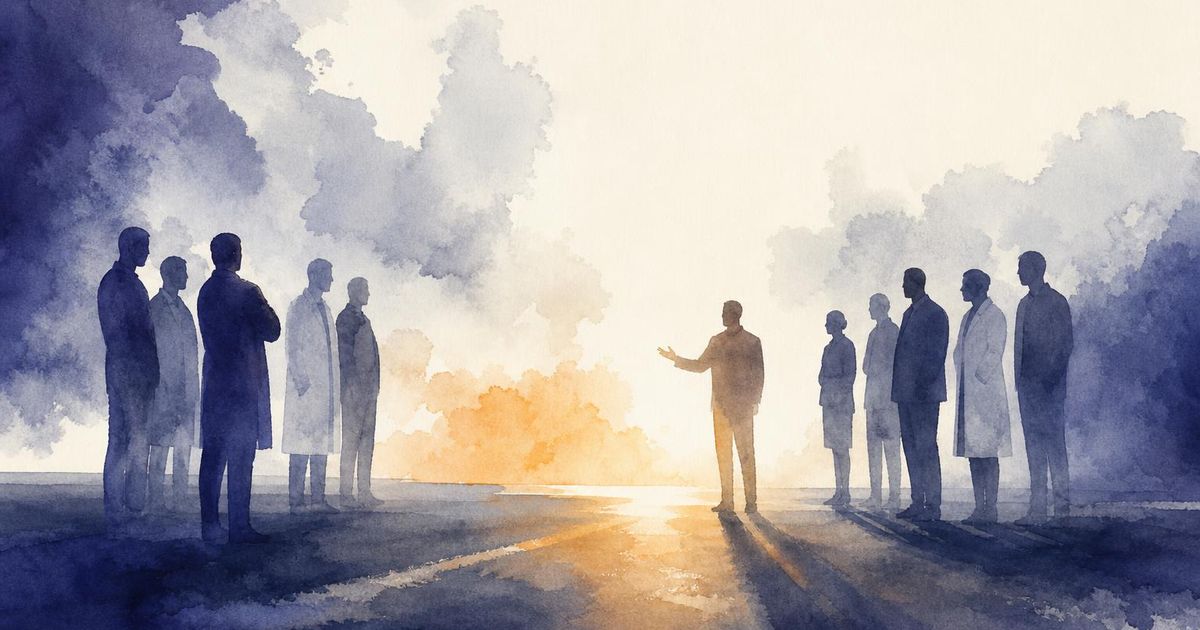
The Faculty Meeting Nobody Wanted to Attend
I was coaching a department chair a few months ago who told me something I have heard too many times: "I have two factions in my department, and they would rather lose a grant than collaborate with each other." Clinical faculty on one side, research faculty on the other, each convinced the other group was draining resources from the real mission.
If you have seen Remember the Titans, you recognize this immediately. The remember the titans leadership lessons in that film are not really about football. They are about what happens when a leader inherits a divided team and has to make it function anyway. Coach Herman Boone did not get to pick his roster. He got two groups of players from rival high schools in 1971 Alexandria, Virginia, divided by race, loyalty, and years of distrust. His job was not to make them like each other. His job was to make them work together.
Leading Divided Teams Starts With Shared Suffering
One of the most underappreciated moves Boone makes early in the film is the brutal training camp at Gettysburg College. Three-a-day practices, early morning runs, relentless physical demands -- none of that was punishment. It was a leveling mechanism. Boone created conditions where the only way to survive was to depend on the person next to you, regardless of which school they came from.
Organizational psychologist Adam Grant discusses a version of this in Give and Take, noting that shared adversity accelerates trust formation faster than almost any team-building intervention. When you struggle alongside someone, you stop seeing them as "the other group" and start seeing them as a person who showed up.
For physician leaders, the translation is not about manufacturing hardship. Your people already have plenty of that. It is about making sure the hardship is shared visibly. When clinical and research faculty serve together on an accreditation review, when everyone is in the same room wrestling with the same budget shortfall -- those shared struggles do what no retreat or motivational email ever will.
The Captain Problem
Here is something the film gets exactly right. Boone could not unify the team alone. He needed Gerry Bertier and Julius Campbell -- the two captains from opposite sides of the divide -- to build a bridge he could not build himself.
This is where physician leaders get stuck. They try to be the sole unifier, holding every meeting and mediating every conflict. It does not scale, and it does not stick.
The leaders I coach who are most effective at leading divided teams in academic medicine identify their Gerry and Julius. They find the informal influencers on each side and invest heavily in those relationships. Not to manipulate. To distribute the work of trust-building across people who have credibility where the chair does not.
Practical steps for this:
- Identify two or three respected voices on each side of the divide. These are not always the loudest people. They are the ones others check with before forming an opinion.
- Bring them into the process early. Share your diagnosis of the division honestly. Ask for their read on it.
- Give them real authority over something shared. A joint committee, a co-led initiative, a shared budget decision. Symbolic roles do not work. The stakes have to be real.
- Protect them when their own side pushes back. Gerry took heat from white teammates for respecting Julius. Your bridge-builders will take heat too. They need to know you have their back.
Remember the Titans Leadership Lessons for the Long Game
The film compresses a season into two hours, which makes unity look faster than it is. In real departments, the timeline is longer. Someone will torpedo a collaborative project. Old grievances will resurface at the worst possible time.
The lesson from Boone is not that unity is a destination. It is that unity is a practice. He did not declare the team unified and move on. He kept reinforcing the structures, kept pairing people across lines, kept demanding that the team behave as one unit even when individuals did not feel it yet.
The behavioral standard came first. The feeling followed.
If you are leading a divided department, the worst thing you can do is wait for people to feel ready to collaborate. Set the expectation. Build the structures. The trust comes from the doing, not the other way around.
Where to Start
Do not start with the big reconciliation meeting. Start with one shared project that requires both sides to contribute something they are good at. Make the wins visible. Let the relationship-building happen inside the work rather than outside it.
If you'd like to learn more, contact us to schedule a time to chat.