
The Leadership Lessons of Remember the Titans
Two Teams Wearing the Same Jersey
You know the scene. First day of football camp in Remember the Titans. Two groups of players arrive on the same bus but could not be further apart. They do not sit together. They do not speak. They share a roster, but they are not a team.
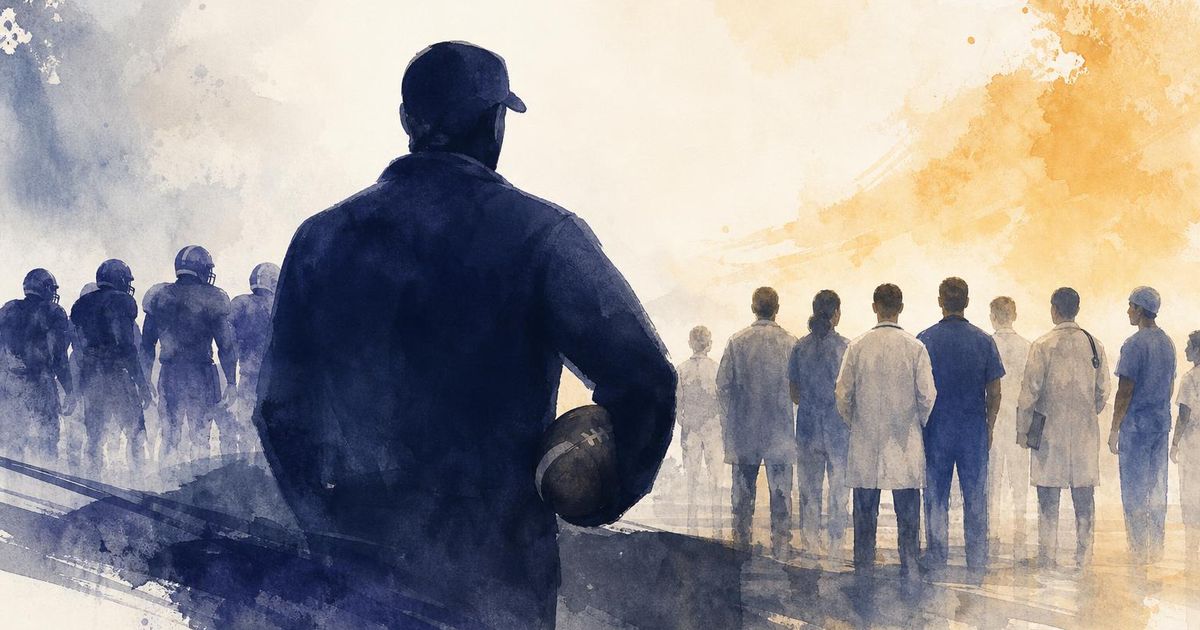
I think about that scene a lot when I work with physician leaders. A department with surgeons and internists who never share a hallway conversation. Clinicians and researchers who quietly question whether the other side pulls its weight. Everyone wears the same institutional badge, but that is about where the unity ends.
Coach Herman Boone walked into that divided locker room and did something most leaders avoid. He refused to pretend the division did not exist.
Name the Divide
Boone did not give a vague speech about togetherness. He forced the issue. He reassigned roommates at camp so that every player roomed with someone from the other side. He required each pair to learn real things about each other -- family, background, fears, ambitions. Not small talk. Real knowledge of another human being.
This is harder than it sounds. And it is exactly what physician team culture demands.
Patrick Lencioni writes in The Five Dysfunctions of a Team that the foundation of any functional team is trust, and trust starts with vulnerability. In academic medicine, vulnerability is not exactly encouraged. You are trained to project competence.
But Boone understood that you cannot build trust across a divide you refuse to acknowledge. If your department has a generational split, a specialty split, or a cultural split, the first leadership move is to name it. Not to blame anyone. Just to say it out loud so you can deal with it.
Shared Suffering, Shared Purpose
At Gettysburg, Boone wakes his players before dawn, marches them to the battlefield, and tells them that men died on that ground because of hatred. And if they do not come together, the same hatred will destroy them.
What Boone did was connect daily practice to something larger than football. He gave his players a shared frame of reference that transcended their individual grievances.
Physician leaders need their own version of this. Not a dramatic 5 a.m. speech. But a clear articulation of what is at stake. Your patients need you to function as one team, not a collection of silos. Your residents are learning how to collaborate by watching you.
If you have never said that out loud to your department, it is worth saying.
One Standard for Everyone
One of Boone's non-negotiables was a single standard of effort, discipline, and accountability. No exceptions for starters. No passes for the coach's favorites. Every player, same rules.
This is where most physician leaders quietly fail. The senior faculty member who skips meetings without consequence. The funded researcher who is excused from clinical duties while clinicians absorb the load. The well-connected physician who gets a pass on behavior that would sink a junior colleague's career.
When leaders tolerate different standards for different people, the team notices immediately. Edgar Schein's research on organizational culture makes this point clearly: a team's real culture is defined not by what leaders say but by what they tolerate.
Consistency is not glamorous. But it is the single fastest way to build credibility across a divided group.
The Gerry and Julius Breakthrough
The emotional core of the film is the relationship between Gerry Bertier and Julius Campbell. They start as adversaries. Their turning point comes when Gerry confronts Julius about not giving full effort, and Julius fires back that Gerry is not holding his own teammates accountable for the same thing. It is an honest, uncomfortable exchange. And it is the moment real trust begins.
This is what effective team building in medicine actually looks like. Not retreats with icebreakers. Honest conversations where people say what they see and hold each other to the same standard. The physicians I coach who build the strongest teams are the ones willing to sit in that discomfort rather than avoid it.
Unity Is a Decision
What I take from Remember the Titans most of all is this: Boone did not wait for his players to feel like a team before treating them like one. He decided they were a team and held that standard until the feeling caught up.
Too many physician leaders wait for consensus before acting. But consensus across a divided group rarely arrives on its own. Sometimes you have to set the standard, absorb the pushback, and trust that results will bring people around.
That takes real courage. It also takes support.
If you'd like to learn more, contact us to schedule a time to chat.