The Queen's Gambit and the Power of Obsessive Focus
She Sees the Board on the Ceiling
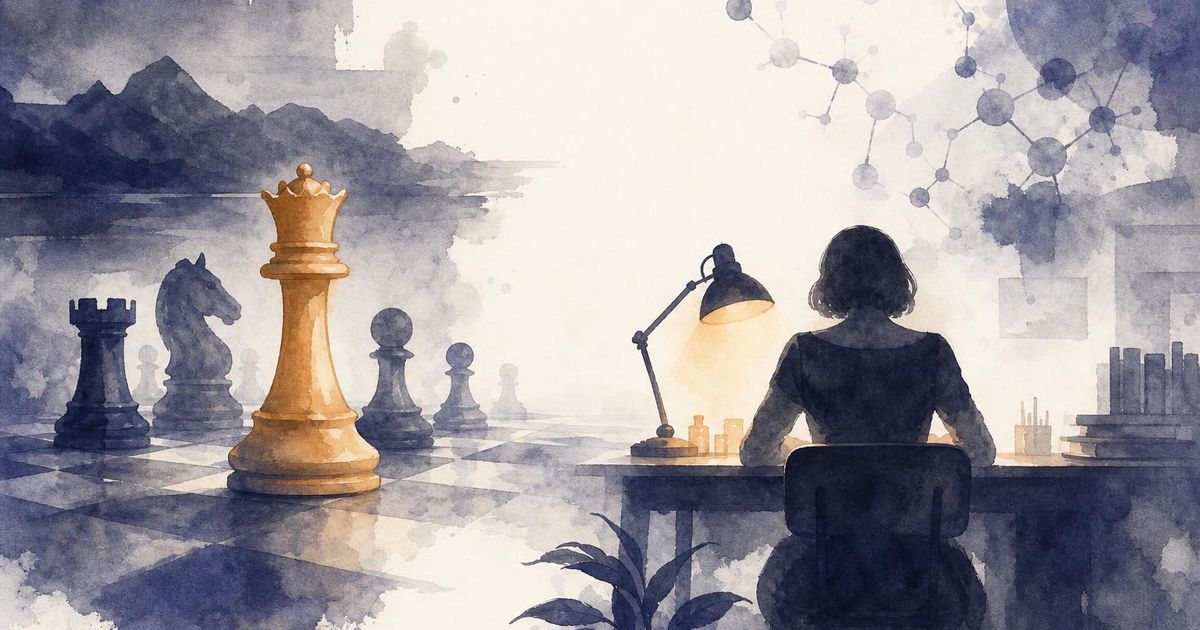
There is a scene in The Queen's Gambit where Beth Harmon lies in bed staring at the ceiling. She is not looking at plaster. She is seeing chess pieces. Entire games playing out move by move above her head. The world disappears. There is only the board.
If you have ever lost hours inside a research question or a grant revision and looked up to realize it was midnight, you know what that feels like.
When Deep Focus Is a Superpower
Beth's obsessive focus is what makes her extraordinary. She does not dabble in chess. She consumes it. Every waking hour devoted to studying games, memorizing openings, and visualizing positions no one else can see.
In academic medicine, this kind of focus produces breakthroughs. The researcher who spends three years on a single mechanism. The surgeon who practices a new approach until their hands know it better than their conscious mind does. Cal Newport calls this "deep work" in Deep Work: Rules for Focused Success in a Distracted World — the ability to concentrate without distraction on a cognitively demanding task. It is rare and enormously valuable.
Beth has it in abundance. So do many of the physicians I coach.
When It Stops Serving You
But watch what else happens to Beth. She alienates the people who care about her. She self-medicates. She treats every relationship as secondary to the board. By the middle of the series, she is winning tournaments and falling apart simultaneously.
That pattern shows up in academic medicine more than people admit. The physician who is exceptional in the lab but has no idea what is happening in their own division. The faculty member who publishes relentlessly but has never invested in a leadership skill. The researcher so locked into one question that they miss the career pivot their department needs from them.
Obsessive focus without self-awareness is not a strategy. It is a slow burn toward isolation.
Beth's Turning Point
What finally changes for Beth is not more focus. It is connection. In the final episode, she calls her friends. She accepts help. She lets other people into the process she had kept entirely private.
She still plays the game alone. But she stops preparing alone.
That is the lesson. Deep focus is your edge. But the people around you — colleagues, mentors, a coach — are what keep the edge from cutting you.
The Board Is Not the Whole Game
If you have built your career on the ability to go deep, that is worth protecting. But take an honest look at what you might be neglecting while you stare at the ceiling. Relationships. Leadership development. The broader view of where your career is heading.
Beth Harmon won the match when she finally let people in. You might be surprised what opens up when you do the same.
Learn about how coaching for departments can support your leadership pipeline.