
Patch Adams and the Real Tension Between Compassion and Systems in Medicine
A Movie That Refuses to Go Away
I have a complicated relationship with Patch Adams. It came out in 1998, got mixed reviews, and should have faded into the background of Robin Williams' filmography. But it keeps showing up -- in conversations with faculty, in medical humanities seminars, in the occasional keynote who quotes it without irony.
There is a reason it persists. The movie taps into something most physicians carry but rarely talk about openly: the feeling that the system they work inside is pulling them away from the work they actually signed up to do.
The Setup That Hits Close to Home
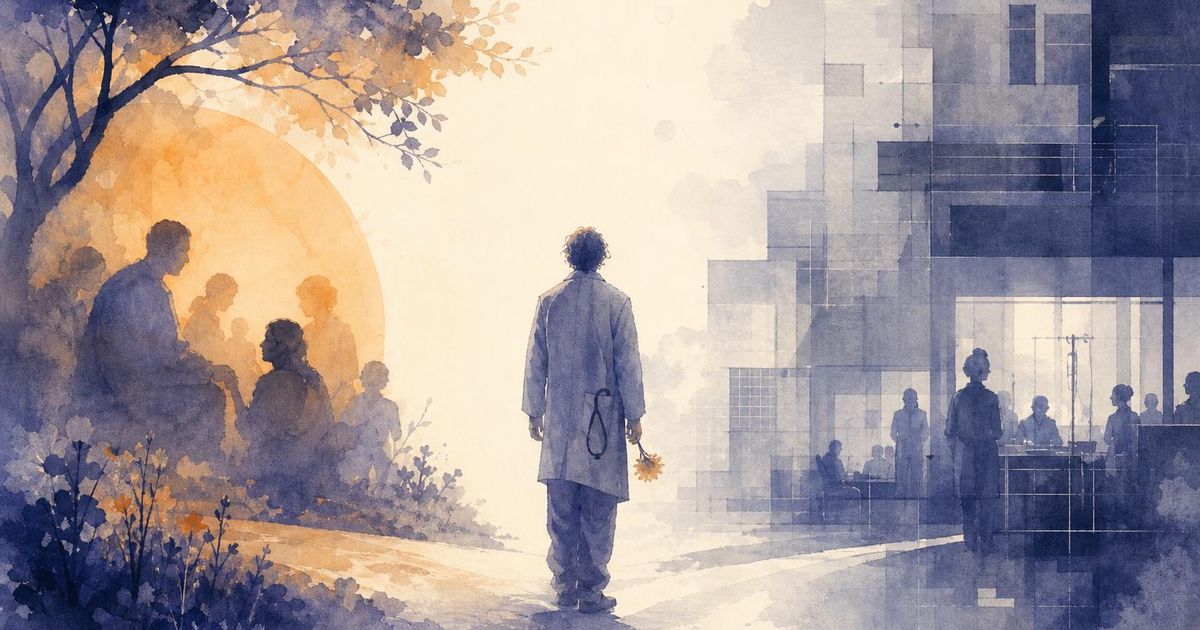
For those who haven't seen it in a while, here is the basic premise. Hunter "Patch" Adams enters medical school determined to treat patients as whole human beings -- humor, emotional connection, an insistence on seeing the person behind the diagnosis. His dean, Walcott, sees this as a threat to professional standards. The movie frames it as compassionate rebel versus cold institution.
Dean Walcott is a cardboard villain. Patch is a saint with a rubber nose. The movie never grapples with the reality that systems exist for reasons -- some very good ones. Protocols save lives. Credentialing matters. You cannot run a teaching hospital on charisma alone.
But the tension the movie dramatizes is not fictional. It is just oversimplified.
The Tension Is Structural, Not Personal
Most of the faculty I coach are not struggling because they lack compassion. They are struggling because the structures around them make compassion expensive. Every minute spent sitting with a grieving family is a minute not spent on documentation that drives reimbursement. Every mentoring conversation is time that does not show up in the productivity metrics reviewed at annual evaluation.
As Dr. Abraham Verghese has written about at Stanford, the modern physician often spends more time with the "iPatient" -- the digital representation in the electronic health record -- than with the actual human being in the room. The system does not intend to be hostile to compassion. It just accidentally optimizes for everything else.
This is what Patch Adams gets directionally right. The enemy is not a mean dean. The enemy is an incentive structure that treats humanistic care as a nice-to-have rather than a core competency.
Where the Movie Loses the Plot
The film's answer is essentially: be brave enough to be yourself and the system will eventually come around. Patch goes before a review board, gives an impassioned speech, and wins. Roll credits.
In academic medicine, that is not how it works. I have watched faculty deliver versions of that speech -- heartfelt arguments for why patient relationships should count more in promotion decisions -- and walk out of the room with nothing changed. Individual courage is necessary, but it is not a strategy.
Think of it this way. A basketball coach who only motivates but never draws up plays is going to lose a lot of games. Inspiration matters, but so does the system you build around it. The physicians who sustain compassion over a long career are not just passionate people. They are strategic ones. They learn which committees shape policy. They find allies. They build track records that make them hard to dismiss when they advocate for change.
What You Can Actually Take From This Film
If you are an early or mid-career faculty member feeling the pull between what you know matters and what the system rewards, here is what I would encourage you to consider.
First, name the tension honestly. It is not a personal failing that you feel squeezed. It is a structural reality. That distinction matters because it changes where you direct your energy.
Second, protect your compassion deliberately. Do not assume it will survive on autopilot. Protect mentoring time the way you protect clinic time. Put it on the calendar and defend it.
Third, play the long game on systems change. You are not going to fix the incentive structure this quarter. But you can get on the committee that reviews promotion criteria next year. You can mentor the next generation differently. You can document humanistic care's impact in ways the institution cannot ignore.
The Question Behind the Movie
Underneath the sentimentality, Patch Adams asks a question that deserves a serious answer: can you be a compassionate physician inside a system that was not designed to reward compassion?
I believe the answer is yes, but only if you treat it as a strategic challenge rather than a moral one. The physicians who burn out fastest are often the ones who try to be Patch Adams -- all heart, no plan. The ones who sustain bring both the compassion and the playbook.
If you'd like to learn more, contact us to schedule a time to chat.