
Gladiator and Leading Without a Title
The General Who Became a Slave
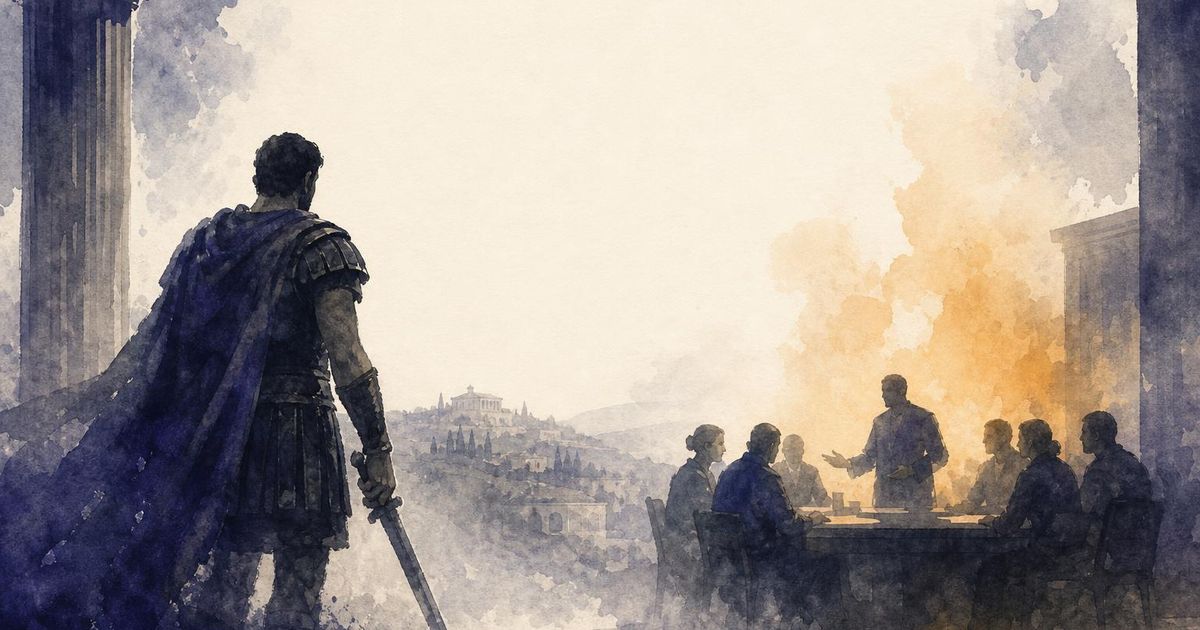
At the beginning of Gladiator, Maximus has everything. He commands the Roman legions. The emperor trusts him. His men would follow him anywhere. Then in a matter of hours, it's all gone. His title. His army. His family. He's sold into slavery and dumped in a gladiator pit in a remote province.
And somehow, he leads again.
That's the part of the movie I keep coming back to. Not the battle scenes. Not the revenge arc. The fact that a man stripped of every formal credential still became the person others looked to.
Nobody Gave Him Permission
When Maximus arrives at Proximo's gladiator school, he's nobody. He refuses to fight at first. He keeps to himself. But the moment the arena forces his hand, something becomes obvious to everyone around him. This man knows what he's doing.
There's a scene early in the provincial arena where the gladiators are thrown in as a disorganized group, expected to die for entertainment. Maximus takes charge in seconds. He forms them into a defensive line, calls out commands, and turns a slaughter into a coordinated fight. Nobody elected him. Nobody appointed him. The other gladiators followed him because he was clearly the most competent person in that arena and he was trying to keep them alive.
I see this dynamic in academic medicine more than people realize. The physician who runs the morbidity and mortality conference with such skill that everyone defers to her. The hospitalist who coordinates a complex patient transfer and suddenly the whole team is looking to him for next steps. No title on the org chart. No formal authority. Just competence made visible at the right moment.
Character Is Visible Under Pressure
Maximus doesn't play politics in the arena. He doesn't scheme for better treatment or try to ingratiate himself with Proximo. He simply does what's in front of him with an integrity that's impossible to fake.
When the other gladiators see him refuse to showboat for the crowd, when they watch him help a wounded fighter instead of finishing him off for applause, they learn something about who he is. Not from a speech. From behavior.
Physician leaders, especially those without positional power, build credibility the same way. Your colleagues are watching how you handle the difficult consult. How you respond when a plan falls apart at 2 a.m. Whether you throw someone under the bus in a case review or take responsibility. These moments accumulate. They become your reputation. And reputation is the only authority that matters when you don't have a title.
Proximo Saw It Too
There's a moment where Proximo, the gladiator owner, pulls Maximus aside and tells him about his own days in the arena. He says Marcus Aurelius once freed him not because he was the best fighter, but because his courage won the crowd. "Win the crowd," Proximo tells Maximus, "and you will win your freedom."
Proximo recognized leadership material not because Maximus asked for recognition, but because it was radiating off him.
This is what I tell faculty who feel stuck without a leadership title. You don't need the title to build influence. But you do need to be visible. Competence practiced quietly in a corner doesn't move your career forward. The physicians I coach who break through are the ones who let their work be seen. They volunteer for the tough committee. They present at grand rounds. They mentor openly. They win the crowd.
Commodus Had the Title. Maximus Had the People.
The contrast between Maximus and Emperor Commodus is the spine of the movie. Commodus holds every title imaginable. He commands armies and senators and the Praetorian Guard. But when both men stand in the Colosseum, the crowd chants for Maximus.
Commodus has positional power. Maximus has earned authority. And the movie makes clear which one is real.
Academic medicine is full of this tension. There are people with impressive titles who struggle to get buy-in on anything. And there are assistant professors with no administrative role who somehow shape the culture of an entire division. The difference is almost never rank. It's trust, built one interaction at a time.
You Don't Need the Title to Start
If you're a physician who leads without formal authority, you're already doing the harder version of leadership. You're influencing without a mandate. That takes more skill, not less.
The question is whether you're being intentional about it or just hoping people notice. If you want to sharpen how you lead from where you are, that's exactly the kind of work we do together. Let's talk about it.