
Ford v Ferrari and the Obsession with Getting It Right
Two Guys Who Refused to Build a Bad Car
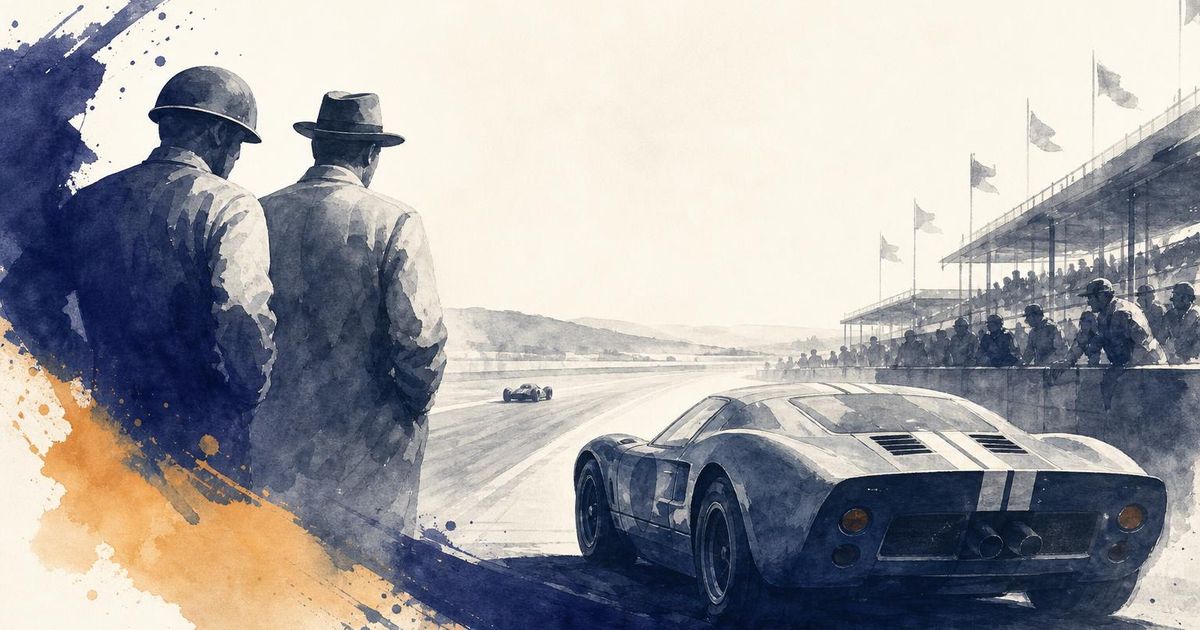
Ford v Ferrari is about building the perfect race car. But it is really about what happens when people who care deeply about getting it right run headfirst into an organization that cares about something else entirely.
Carroll Shelby and Ken Miles are trying to build a car that can beat Ferrari at Le Mans. Every bolt, every gear ratio, every tenth of a second matters to them. That obsession is what makes the car fast. It is also what makes them nearly impossible for Ford to manage.
If you have ever felt like the institution does not understand what you are actually trying to do, this movie will feel uncomfortably familiar.
The Brakes Scene
Ken Miles takes the first version of the GT40 out for a test drive. He comes back and tells Shelby the car is terrible. The brakes are wrong. The aerodynamics are wrong. The whole thing needs to be rethought.
He is not being dramatic. He is being precise. He knows what right feels like, and this is not it.
I work with physicians who have this same instinct. They know when a curriculum is not working. They can feel when a clinical workflow is producing unnecessary friction. That sensitivity is not a personality flaw. It is expertise.
But the people above them often experience that precision as obstruction. "Why can't you just sign off on this?" "We need to move forward."
Miles heard that same frustration from Ford's executives. It almost cost him his seat in the car.
Leo Beebe and the Politics of Credit
The real antagonist of Ford v Ferrari is not Ferrari. It is Leo Beebe, Ford's vice president, who cares more about managing Henry Ford II's ego than building the best car. He does not care about lap times. He cares about optics.
In a devastating scene near the end, Beebe pressures Miles to slow down in the final laps of Le Mans so all three Ford cars can cross the finish line together. A photo finish. A corporate moment. Miles agrees, and it costs him the win on a technicality.
The man who drove the best race lost because the organization wanted a prettier story.
You know where this shows up in academic medicine. The faculty member who does the work but whose name gets buried. The promotion case that stalls because the candidate is "difficult" — meaning they pushed back on something that needed pushing back on.
Politics do not care about your lap times.
"You Can't Buy a Win, Mr. Ford"
Shelby says this to Henry Ford II. Ford has poured millions into the program. Best engineers. Best facilities. Best everything. Shelby tells him it is not enough. You cannot buy your way to a win. You need the right people and you need to get out of their way.
Academic medical centers pour resources into strategic plans, new buildings, recruitment packages. But the thing that separates good from great is a person obsessed with getting it right. That person needs space, trust, and someone willing to shield them from the noise.
If you lead a team, ask yourself: Are you giving those people room to work, or are you asking them to slow down for the photo finish?
The 7,000 RPM Scene
Near the end, Miles pushes the car to its limit at Le Mans. He hits 7,000 RPM — where the engine could blow apart or break through to something nobody thought possible. The sound drops away. He enters a flow state where he and the machine are one thing.
That scene captures something I see in the physicians I work with. A place past exhaustion, past the politics, where the work becomes the thing. Not for recognition. Because the work itself demands it.
That place is worth protecting.
Stop Slowing Down for the Photo Finish
The tragedy of Ford v Ferrari is not that Miles lost the race. It is that the system could not tolerate letting the best person do their best work without interference.
Academic medicine has the same tendency. It attracts people who are obsessive about quality. Then it buries them in committees, compliance requirements, and politics that have nothing to do with the work they came to do.
You cannot eliminate the politics. But you can get clearer about what matters to you and where you need to stop slowing down for someone else's photo finish.
If you care deeply about the craft and the institution keeps getting in the way, that tension is worth examining. Not to fix you. To help you navigate the system without losing what makes you exceptional. Schedule a conversation — I would be glad to think through it with you.