
Asking for Help Is Not a Sign of Weakness
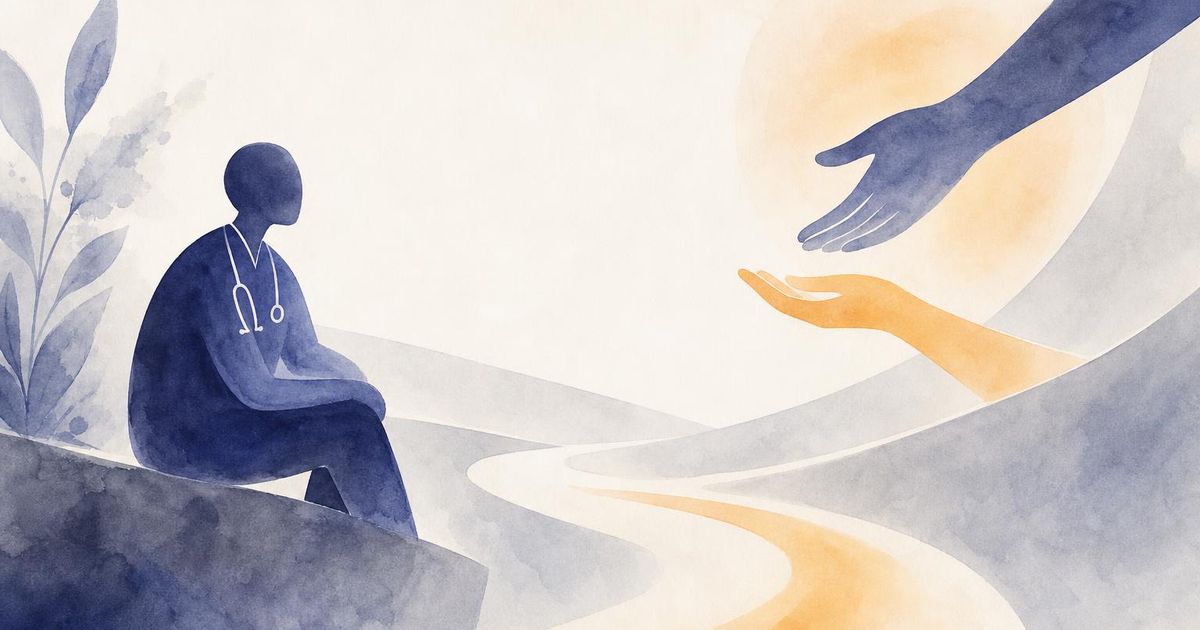
You Were Trained to Handle It Alone
Somewhere in the first weeks of medical school, you absorbed a rule no one explicitly taught you: figure it out yourself. That rule got reinforced in residency, rewarded in fellowship, and by the time you made faculty, it was baked into your identity.
So when something in your career or your life starts to crack, your instinct isn't to reach out. It's to push harder.
Self-Reliance Has an Expiration Date
I'm not here to tell you that self-reliance is a bad thing. It's kept you alive in call rooms and code blues. But the version of it that served you at 2 a.m. during intern year is not the version that will serve you as a division chief, a program director, or a mid-career faculty member trying to figure out what comes next.
At a certain point, going it alone stops being strength. It becomes a bottleneck.
The Leaders Who Ask
In Dare to Lead, Brene Brown makes a point that lands hard in academic medicine: "Leaders must either invest a reasonable amount of time attending to fears and feelings, or squander an unreasonable amount of time trying to manage ineffective and unproductive behavior." Asking for help is part of that investment. It is not a concession. It is a leadership decision.
The best physician leaders I've coached all share one trait. They got comfortable saying three sentences that most of their peers avoid: "I need help with this." "I don't have that figured out yet." "Can I get your perspective?"
Those sentences didn't make them look weak. They made them easier to trust, easier to follow, and far more effective.
Start With One Honest Conversation
You don't need to overhaul your entire approach. Pick one thing you've been carrying alone -- a conflict with a colleague, a career decision you keep circling, a sense that something isn't working -- and bring it to someone. A mentor. A peer. A coach. Say what's actually going on instead of the polished version.
That's not vulnerability for its own sake. That's the same pattern recognition you use every day in clinical work: identify what you can't solve alone, and consult.
The Takeaway
Asking for help is not a sign of weakness. It is a sign that you take your work and your growth seriously enough to stop pretending you have it all figured out.
If this resonates, check out our individual coaching options.