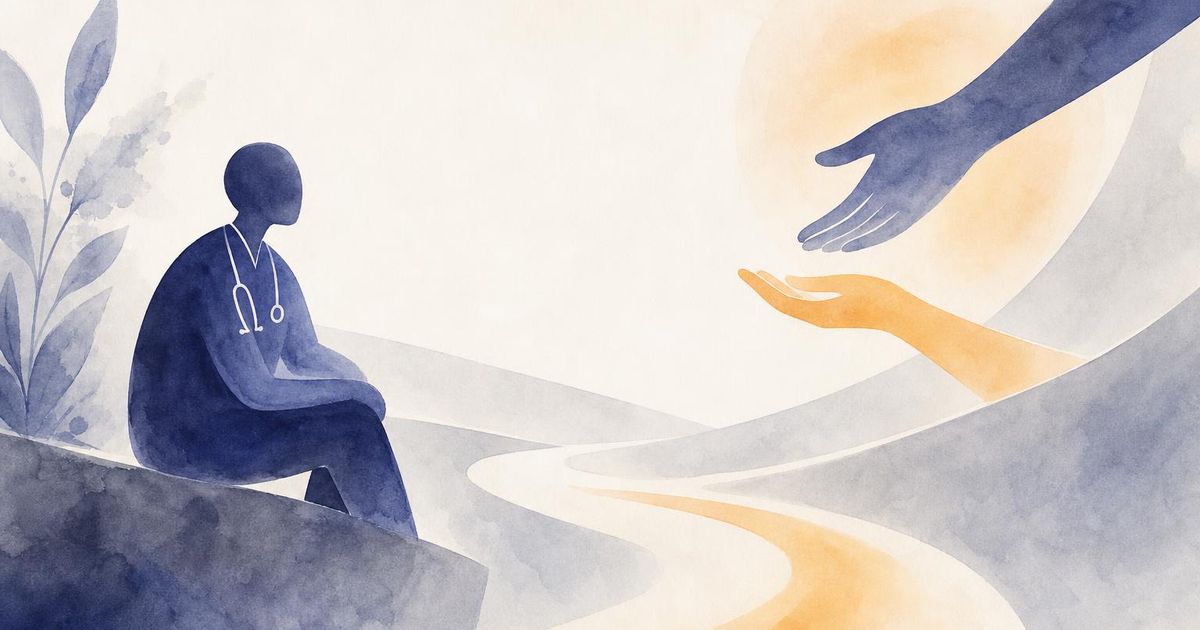
Asking for Help Is Not a Weakness

The Quiet Agreement Nobody Signed
There is an unspoken contract in academic medicine. You do not talk about struggling. You do not admit you are stuck. And you absolutely do not ask for help with things you are supposed to have mastered by now.
Nobody handed you this contract. But if you are a physician in academic medicine, you signed it anyway -- sometime around your third year of medical school, when asking for help physicians around you never asked for started to feel like a confession.
The problem is not that you learned self-sufficiency. The problem is that you never learned when to stop relying on it.
Self-Awareness Is the Skill Nobody Taught You
In Think Again, Adam Grant argues that the most effective people are not the ones with the most answers. They are the ones who know when their answers are no longer working. He calls it "confident humility" -- the ability to believe in your capacity while staying honest about your gaps.
That sounds simple. In medicine, it is radical.
Physician vulnerability is treated like a liability across most of academic medicine. But the physicians I coach who make the fastest progress are the ones who can say, clearly and without drama, "This is where I need support." That is not weakness. That is diagnostic accuracy turned inward.
Nobody Questions the Athlete
Think about the best athletes in the world. Every single one of them has a coach. Often more than one. Nobody looks at a tennis player working with a movement specialist and thinks they must be failing. The coaching is understood as part of what makes them elite.
But in academic medicine, we treat the same decision as a warning sign. That gap in logic should tell you something. Coachability in academic medicine is not a deficit. It is a competitive advantage that most of your peers are too proud to use.
What Changes When You Ask
When you finally ask for help, two things happen. First, the weight shifts. Not all of it. But enough to let you think clearly again. Second, you give the people around you permission to do the same thing. That is how cultures change -- not through policy memos, but through one person deciding to be honest.
Asking for help physicians have spent their careers avoiding is not the end of credibility. It is the beginning of growth you cannot access alone.
If you have been carrying something you do not need to carry solo, check out our individual coaching options.