Telehealth Is Here to Stay — What That Means for Faculty
The Temporary Fix That Became Permanent
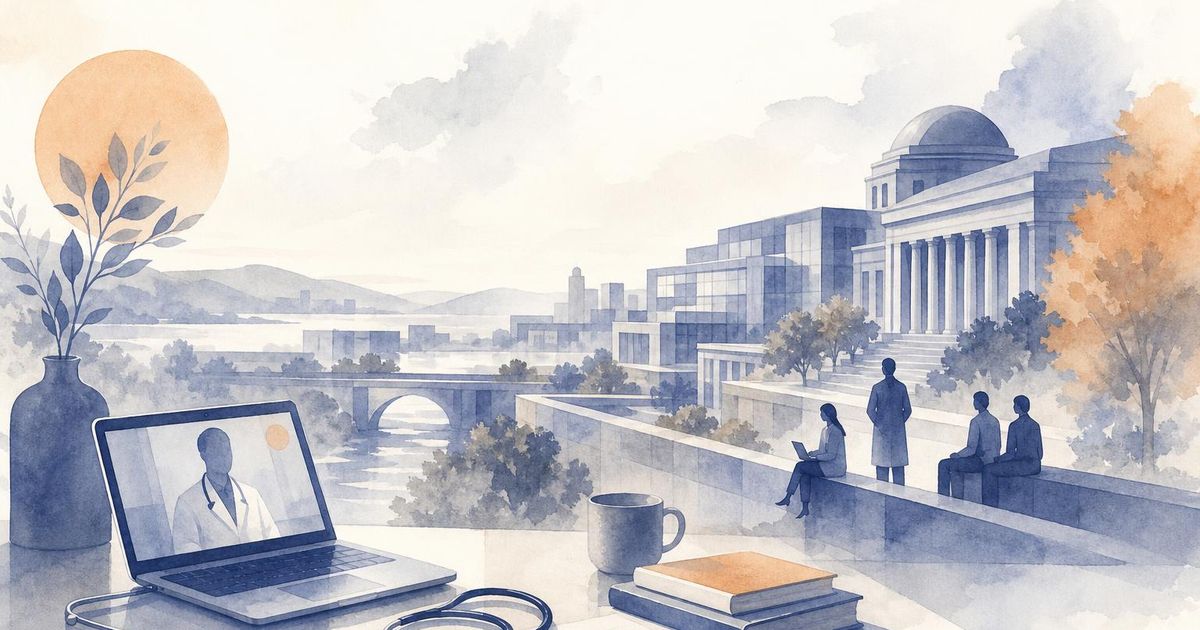
When telehealth exploded in 2020, most of us assumed it was a stopgap. A pandemic workaround. Something we would phase out once things went back to normal.
Things did not go back to normal. And telehealth is not going anywhere.
A 2023 report from the American Medical Association found that nearly 80 percent of physicians now use some form of telehealth in their practice. In academic medicine, where the mission includes training the next generation, that shift carries consequences most institutions have been slow to address.
Your Workload Just Got More Complicated
Here is what I see with the faculty I coach. Telehealth did not replace in-person visits. It added a new lane. You now have clinic days, virtual clinic days, and the asynchronous patient messages that never stop. The total volume of patient interaction has grown, but the time allotted has not.
If your institution treated virtual visits as a simple schedule swap, you already feel this. The work expanded. The support did not.
Teaching Through a Screen Is Different
For clinician-educators, telehealth creates a real pedagogical challenge. How do you teach a trainee to read a room when there is no room? How do you model a physical exam that is not happening?
These are not impossible problems. But they require intentional design. If your department has not rethought its teaching model for a hybrid clinical environment, that is a gap worth raising. The faculty who step up to solve this will be the ones who shape the next era of medical education.
Rethink Your Career Strategy
Telehealth changes the calculus for academic careers in ways that are easy to miss. Virtual care opens the door to regional and national patient populations, which can accelerate your clinical reputation. It also creates new research questions around access, outcomes, and equity that funding agencies are eager to support.
At the same time, it can blur the boundaries between work and home in ways that accelerate burnout. If your virtual clinic runs from your kitchen table, you need even sharper boundaries than before.
Be Intentional About What Comes Next
The faculty who thrive in a telehealth-heavy landscape will not be the ones who passively accept whatever their institution rolls out. They will be the ones who ask hard questions. How does this count toward my clinical effort? What does this mean for my promotion portfolio? Where are the teaching opportunities I can own?
If you are trying to figure out how telehealth fits into your broader career plan, that is exactly the kind of strategic work coaching is built for. I would be glad to think it through with you.