Generational Differences Among Academic Medicine Faculty
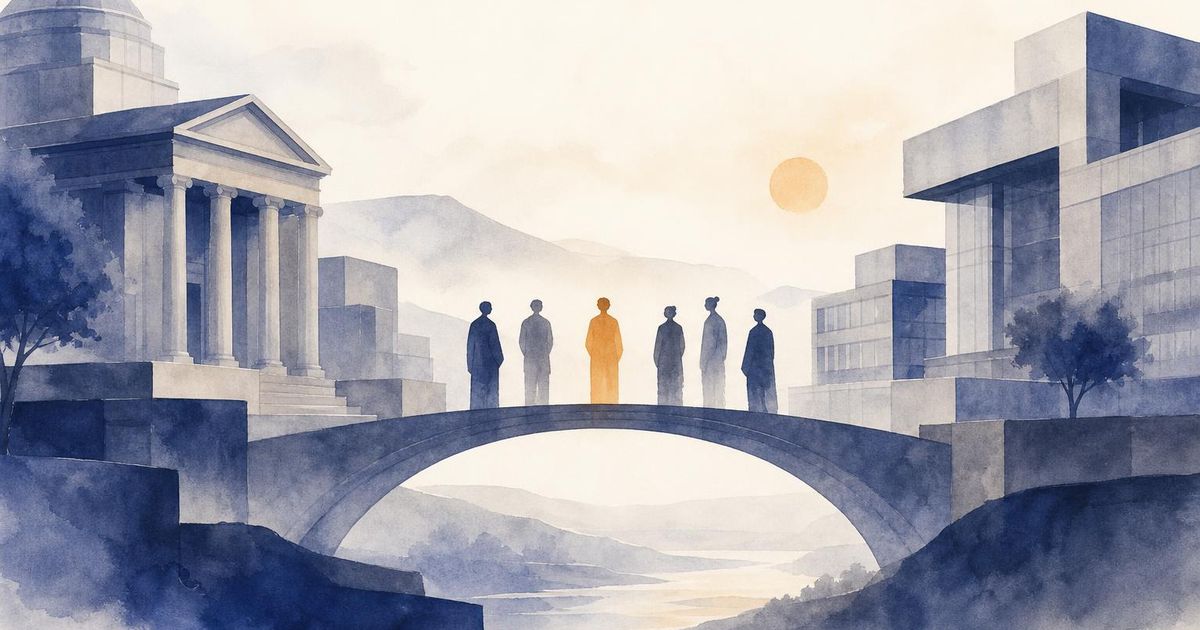
Four Generations, One Department
Right now, in departments across academic medicine, you might have a Boomer division chief, a Gen X vice chair, a Millennial assistant professor, and a Gen Z fellow about to join the faculty. Four people shaped by completely different economic realities, training cultures, and assumptions about what a career should cost you.
Generational differences in academic medicine are not new. But the range of generations working side by side is wider than it has ever been. When leaders treat that range as a nuisance instead of something worth understanding, departments fracture in ways that are entirely preventable.
The "Live to Work" Versus "Work to Live" Spectrum
I have coached faculty across every cohort. The differences are real, but they are not what most people think.
Boomers built academic medicine as we know it. Many entered when institutional loyalty was the default and long hours were assumed. Identity and profession merged completely. That is not a flaw. It is how the system was designed for them.
Gen X are the bridge generation. They watched Boomers sacrifice everything for institutions that later restructured without blinking. They developed a quiet skepticism about institutional promises and value autonomy. They are the most overlooked cohort -- ironic, because they frequently hold the leadership positions where bridging matters most.
Millennials entered carrying unprecedented debt, navigating a post-2008 economy, and expecting transparency in a system built on opacity. They ask questions previous generations considered presumptuous -- about promotion timelines, compensation equity, and sustainable workloads. Those questions are not entitlement. They are due diligence.
Gen Z is the newest cohort arriving on faculty. A 2024 report from the American Medical Association documented that Gen Z physicians prioritize mental health and sustainable practice structures more explicitly than any previous generation. They are not less dedicated. They are more deliberate about the conditions under which they will practice.
Jean Twenge's research in Generations documents these shifts with longitudinal data. The generational differences in academic medicine are not stereotypes. They are measurable patterns.
Where Generational Differences in Academic Medicine Go Wrong
The biggest mistake I see is leaders treating generational differences as a problem to solve by getting everyone on the same page. That page does not exist.
- Assuming one motivation fits all. A Boomer who stayed thirty years for institutional prestige cannot fathom why a Gen Z physician asks about schedule flexibility before the research mission. Neither is wrong. They are operating from different value systems.
- Mistaking boundaries for disengagement. When a younger faculty member protects their evenings, senior leaders read it as a lack of seriousness. Usually it is the opposite -- they are managing capacity so they can show up fully when they are on.
- Ignoring Gen X entirely. Gen X leaders are expected to translate between Boomers and Millennials without anyone asking what they need. Departments that overlook this cohort lose their most pragmatic leaders.
- Labeling instead of listening. The moment a conversation turns to "kids these days" or "out-of-touch senior faculty," learning stops and the actual dynamics go unaddressed.
What Departments Can Do Instead
Bridging generational differences is not about training seminars. It is about how a department operates day to day.
Name the differences openly. The most effective intervention I have seen is a leader who says in a faculty meeting, "We have four generations in this room and we probably think about work differently. Let us talk about that." Naming it reduces the charge.
Build flexibility into expectations. Not everyone demonstrates commitment the same way. Some faculty volunteer for extra call. Others redesign a curriculum or mentor students. A department that only recognizes one type of contribution will only retain one type of faculty member.
Pair across generations intentionally. Cross-generational mentoring works when it goes both ways. Junior faculty learn institutional navigation. Senior faculty learn about emerging technologies and changing trainee expectations.
Invest in the department, not just individuals. Departmental coaching changes the system people work inside. When a department examines its norms together -- how meetings run, how decisions get communicated, how conflict gets handled -- generational friction often resolves because the operating system gets updated.
The Goal Is Not Agreement
Think of it like a coaching staff in sports. You do not need the offensive coordinator and the defensive coordinator to think the same way. You need them to understand each other's priorities and work toward a shared outcome. The differences between Gen Z, millennial physician faculty, and their senior colleagues are not obstacles. They are information about what your people need to do their best work.
The departments that thrive will be the ones where leaders stop trying to flatten differences and start using them as a source of strength.
Learn about coaching for departments.