Coaching for Physicians in Rural Academic Settings
If you practice medicine in a rural academic setting, you already know the paradox. You chose this work because it matters — training the next generation of physicians in communities that desperately need them. But the very thing that makes your role meaningful can also make it isolating. Rural academic medicine coaching is still a relatively new concept for many physicians, and if you have been wondering whether coaching access in rural settings is even realistic, I want to walk through why it absolutely is.
The Isolation Is Real
I have talked with physicians at rural academic programs who describe a particular kind of loneliness. It is not that they lack colleagues — they work with talented people every day. But the pool of peers who understand the specific pressures of academic medicine in a smaller community is often vanishingly small. You might be the only person in your department juggling a clinical load, teaching responsibilities, scholarly expectations, and the politics of being a visible faculty member in a tight-knit town.
A 2019 study published in the Journal of Rural Health found that rural physicians reported significantly higher rates of professional isolation than their urban counterparts, and that this isolation was linked to lower career satisfaction and higher burnout. That tracks with what I hear from faculty in these settings. When there is no one nearby who gets what your day looks like, it is hard to process the challenges out loud.
Why Traditional Coaching Models Fall Short
For a long time, physician coaching in rural settings felt like something designed for people at large urban medical centers. The coaches were there. The peer cohorts were there. The professional development infrastructure was there. If you were hours from a major metro area, you were largely on your own.
Even when institutions offered coaching, it often came in the form of fly-in workshops or annual retreats — helpful, sure, but not the kind of sustained relationship that produces real growth. Think of it like a baseball team that only has a hitting coach visit once a quarter. You might pick up a tip or two, but you are not building the consistent feedback loop that changes performance over time.
Virtual Coaching Changes the Equation
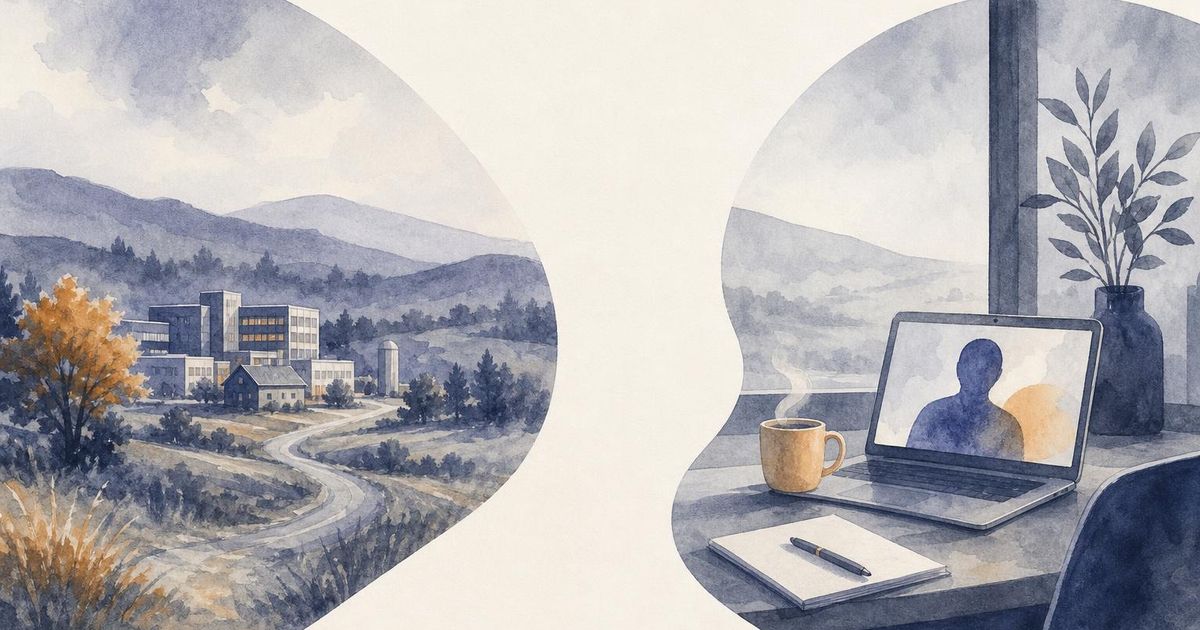
The shift to virtual coaching has been one of the most meaningful developments for physicians in rural academic medicine. A strong coaching relationship does not require being in the same zip code. It requires trust, consistency, and a coach who understands your context.
Virtual coaching for rural physicians works well for several reasons. First, it removes the geographic barrier entirely. You can work with a coach who specializes in academic medicine regardless of where either of you lives. Second, it fits more naturally into an already packed schedule. No travel time, no coordinating around clinic days — just a focused conversation from your office or home. Third, and this is the part people underestimate, it can actually feel more private. In a small community where everyone knows everyone, the discretion of a virtual coaching relationship matters.
What to Look for in a Coach Who Gets Rural Academic Life
Not every coach will understand your world, and that is okay. What matters is finding someone who takes the time to learn it. When you are evaluating a potential coach, pay attention to whether they ask about your specific environment. Do they want to know about your institutional structure, your community dynamics, the ways rural practice shapes your identity as a faculty member?
A good coach will also understand that physician coaching in rural settings often involves navigating dual relationships, limited resources, and the pressure of being highly visible. You are not just a faculty member — you are likely a community figure. That adds a layer of complexity to decisions about leadership, boundaries, and career direction that coaches unfamiliar with rural life might miss entirely.
You Do Not Have to Figure It Out Alone
The physicians I have worked with in rural academic settings often share one thing: they waited too long to seek coaching because they assumed it was not available to them. They thought coaching was something for people at bigger institutions with bigger budgets. That assumption costs talented faculty years of support they could have had.
If you are in a rural academic setting and have been thinking about working with a coach, the barriers are lower than they have ever been. The right partnership can help you navigate isolation, clarify your goals, and build a career that is sustainable in the community you have chosen to serve.
Check out our individual coaching options.